Search Results
Search this site
264 results found with an empty search
- Dementia Epidemic Drives Growth, and Kevin Jameson of the Dementia Society Responds
Kevin Jameson Presenting at Inaugural Dance Against Dementia Event in 2013 | Warrington, PA Dateline: December 1, 2014 Press Release: PR.com Dementia Society of America, led by Kevin Jameson, is a nonprofit organization that serves the Dementia community. Jameson announced recently that four new members have been selected to serve on the organization’s Board of Directors. The new members include a retired educator, a marketing professional, a journalist, and a video and social media expert. The new board members were installed as of October 1, 2014. Their terms will last through December 31, 2015. Blaine Greenfield, Professor Emeritus Blaine Greenfield taught college courses for over 35 years and headed his own marketing firm that assisted small- and mid-sized businesses. Six years ago, he took a new job title: “Rewirement” Expert-in-Training. As such, he continues to teach part-time and is active in several community organizations, including SCORE, SART, and Lessons in Leadership. And he publishes an online newsletter, BLAINESWORLD. Blaine now resides in Asheville, North Carolina. Patrick and Peggie Walsh Patrick Walsh, along with his wife and long-time business partner in The Walsh Group, Peggie Walsh, has experienced the role of family Dementia-caregiver and has been a stalwart advocate for person-centered care, alternative therapies, and the role that a positive mental attitude can play within the entire Dementia community. Pat is a professional web strategist and tracks everything to prove an effective return on investment. Mr. Walsh is marketing counsel to multiple nonprofits. Sandy DeHaven Sandy DeHaven has more than 35 years of experience in writing and public relations, working recently for newspapers and online news services. During her news tenure, she earned a handful of Keystone Press Awards presented by the Pennsylvania Newspaper Association. Sandy knows first-hand the challenges and opportunities Dementia can present to families, friends, and co-workers. Tony Martin Tony Martin travels the United States and beyond as a Fortune 500 corporate marketing professional specializing in social media, video production, and editing. Tony graduated from New Jersey City University in Jersey City, New Jersey, and from the Mason Gross School of the Arts. Despite his tens of thousands of devoted Twitter followers and YouTube viewers, he keeps his perspectives on what life is all about... helping others and making a difference in the world. Tony seeks to introduce the up-and-coming generations to Know Dementia®! He lives in the New York City metro area. Kevin Jameson and the Dementia Society Makes Education the Mission The mission of the Dementia Society of America (DSA) is to educate and raise awareness of the broad spectrum of conditions collectively known as Dementia. Many healthcare professionals and policymakers see Dementia as a growing worldwide epidemic. Represented Dementias include Alzheimer's Dementia, Lewy Body Dementia, Frontotemporal Dementia, Vascular Dementia, Dementia resulting from Traumatic Brain Injury (TBI) and/or Chronic Traumatic Encephalopathy (CTE), and many others. Those Facing Dementia Epidemic Need Support DSA provides non-medical materials and resources, and encourages those who provide exemplary Dementia caregiving, counseling, support, and engagement. DSA promotes those who develop prevention initiatives, create innovative products, services, and solutions. DSA also seeks to support programs regularly within continuing care communities and in public Dementia-friendly forums that emphasize meaningful therapies for those living with Dementia and their caregivers, such as music and singing, dance and movement, the visual arts, touch, and sensory stimulation. You can learn more at www.dementiasociety.org. Disclaimer: Dementia Society of America (DSA) provides educational content only and does not offer medical advice. Always consult a qualified healthcare professional before making changes to your medical care. DSA content is created by both human and computer-generated means and is reviewed for accuracy; however, errors may occur. Views expressed by third-party contributors do not necessarily reflect those of DSA. Unless expressly stated, DSA does not endorse or guarantee any third-party products, services, organizations, or external content. All DSA content is copyrighted and/or trademarked and may not be used without written permission.
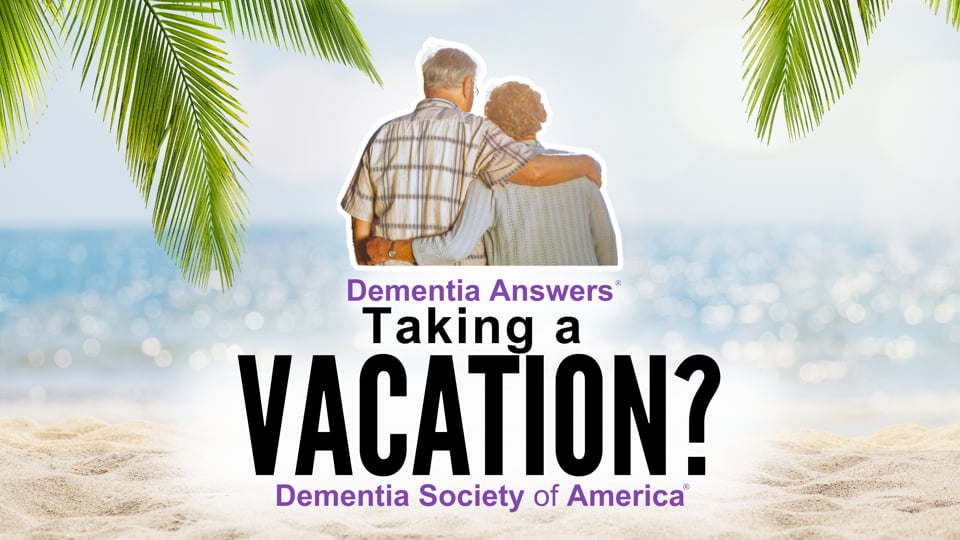
- Dementia Answers: How To Prepare For Vacations
Click here for Spanish Click here for French Video Transcript [Answer 1024] Welcome and thank you for joining me. Today we're going to talk about how to prepare for vacations with people who are living with Dementia. Traveling can still be enjoyable, but it does require extra planning, patience, and thoughtful choices to keep everyone safe and comfortable. Start with simple planning. Choose a destination that is calm, familiar, and not too far away. A place with predictable routines, quiet spaces, and easy walking areas can help reduce confusion and stress. Try to avoid crowded locations or long trips that involve many changes. Prepare ahead of time. Make a checklist of important items: medications, medical information, comfortable clothing, snacks, and familiar objects such as a favorite blanket or photo. These comforting items can help the person feel secure. If you are flying or staying in a hotel, call ahead to ask about early boarding, quiet rooms, or special accommodations. Keep routines steady. A person living with Dementia often feels safest when daily patterns stay the same. Try to keep regular meal times, rest times, and bedtime schedules. Too much activity in one day can lead to confusion or agitation, so plan breaks and quiet moments. Stay patient and flexible. Travel can bring surprises, so allow extra time for everything: getting dressed, walking, eating, and bathroom breaks. Use simple explanations and gentle reassurance if the person feels confused or worried. Safety is key. Make sure the person carries identification that includes your contact information. Consider wearing a medical ID tag. The Dementia Society of America has created Operation Keepsafe. For this reason, please check the website for more information. You want to always keep an eye out for wandering, especially in busy areas. With careful planning, kindness, and a slower pace, vacations can still offer joy, connection, and meaningful memories. On behalf of the Dementia Society of America®, thank you again for joining me today. Stay informed, stay healthy, and take care of yourself. Disclaimer: Dementia Society of America (DSA) provides educational content only and does not offer medical advice. Always consult a qualified healthcare professional before making changes to your medical care. DSA content is created by both human and computer-generated means and is reviewed for accuracy; however, errors may occur. Views expressed by third-party contributors do not necessarily reflect those of DSA. Unless expressly stated, DSA does not endorse or guarantee any third-party products, services, organizations, or external content. All DSA content is copyrighted and/or trademarked and may not be used without written permission.
- Dementia Answers: What is Hospice?
Click here for Spanish Click here for French Video Transcript [Answer 1016] Welcome and thank you for joining me. Today, we're talking about hospice care, a special kind of care for people who are near the end of life. Hospice focuses on comfort, not cure. It is meant for people who have a serious illness and are expected to live about six months or less, based on a doctor's judgment. Surprisingly, hospice may be paused depending on improvements to the person's rate of decline. On the other hand, if appropriate, it may also be renewed by the medical team after the first six months. The main goal of hospice is to help the person feel peaceful, comfortable, and supported. Hospice care helps with pain, breathing trouble, anxiety, and other distressing symptoms. It also provides support for family members and caregivers. Hospice care can be given in the person's home, a nursing home, an assisted living facility, or a dedicated hospice center. A team of people usually helps, including doctors, nurses, social workers, home health aides, chaplains, and volunteers. They all work together to meet the person's physical, emotional, and spiritual needs. Choosing hospice does not mean giving up. It means focusing on comfort and quality of life, rather than pursuing treatments that may no longer be effective. You can also stop hospice at any time if the situation changes. Hospice can help people with many illnesses, including advanced Dementia, cancer, heart failure, and others. It is often paid for by Medicare, Medicaid, or private insurance. Simply talking about hospice early, openly, and often can help families make better decisions and prepare in a calm, loving way. Having a conversation about hospice preferences in midlife instead of just at the end of life is becoming more common. On behalf of the Dementia Society of America®, thank you again for joining me today. Stay informed, stay healthy, and take care of yourself. Disclaimer: Dementia Society of America (DSA) provides educational content only and does not offer medical advice. Always consult a qualified healthcare professional before making changes to your medical care. DSA content is created by both human and computer-generated means and is reviewed for accuracy; however, errors may occur. Views expressed by third-party contributors do not necessarily reflect those of DSA. Unless expressly stated, DSA does not endorse or guarantee any third-party products, services, organizations, or external content. All DSA content is copyrighted and/or trademarked and may not be used without written permission.
- Dementia Answers: Paying for Dementia Care
Click here for Spanish Click here for French Video Transcript [Answer 1109] Welcome, and thank you for joining me. Today we are talking about ways to pay for Dementia care. As you might guess, this is a complex issue with no simple answers, but I'll do my best to give you the big picture overview. Where are some places to look for help paying for Dementia care? First, there is Medicare, a government health insurance program for people age 65 and older. Medicare may cover doctor visits, hospital stays, medicines, and short-term rehab care, but it does not pay for long-term care, like help at home or in a safe and secure care community, often referred to as memory care. Medicaid is another government program for people with low income and limited savings. Medicaid may help pay for long-term care, including nursing homes, and in some cases, care at home. Each state has its own rules, so it's important to check with your local Medicaid office. Some people use private health insurance or long-term care insurance if they have it. These plans may help with services that Medicare does not cover. Others may need to use personal savings, retirement income, or help from family to pay for care. In some cases, veterans benefits can help if the person with Dementia served in the military. Some states or local programs also offer financial help for caregivers: home care, support, respite or adult day programs. Payment for family caregiving depends on several factors, including state regulations, which vary across the country and set different rules, eligibility requirements, and payment rates. In addition, often the person receiving care must meet specific criteria for a program or insurance to cover the costs. The level of care needed, such as the amount of assistance required and the complexity of tasks is a key factor. In some cases, the caregiver's experience or training may be considered with certain programs requiring specific qualifications or certifications. Who can help with figuring out the best strategy for Dementia care? It's a good idea to talk with a professional geriatric care manager, elder care attorney, or financial planner who understands Dementia care. They can help you look at your options and plan ahead. Paying for Dementia care can be challenging, but knowing what help is available can make a big difference. On behalf of the Dementia Society of America®, thank you again for joining me today. Stay informed, stay healthy, and take care of yourself. Disclaimer: Dementia Society of America (DSA) provides educational content only and does not offer medical advice. Always consult a qualified healthcare professional before making changes to your medical care. DSA content is created by both human and computer-generated means and is reviewed for accuracy; however, errors may occur. Views expressed by third-party contributors do not necessarily reflect those of DSA. Unless expressly stated, DSA does not endorse or guarantee any third-party products, services, organizations, or external content. All DSA content is copyrighted and/or trademarked and may not be used without written permission.
- Dementia Answers: What Are ADLS?
Click here for Spanish Click here for French Video Transcript [Answer 1122] Welcome, and thank you for joining me. What are Activities of Daily Living, also known as ADLs? These are basic tasks people need to do every day to live safely and independently. Health professionals and insurance companies often use ADLs to help determine the type of care or support a person may need. The six basic activities of daily living: Bathing: being able to wash your body safely, either on your own or with some help. Dressing: putting on and taking off clothes, including using fasteners like buttons or zippers. Eating: being able to feed yourself, though this does not include cooking. Toileting: getting to and from the toilet, using it properly, and cleaning up afterward. Continence: being able to control your bladder and bowel movements or manage incontinence if needed. And lastly, one broad set of activities that include transference and mobility. If a person has trouble with one or more of these activities, they may need help from a loved one, care partner, professional home care services, or an assisted living setting. Understanding ADLs helps families and healthcare teams make good decisions about independence and safety. On behalf of the Dementia Society of America®, thank you for joining me today. Stay informed, stay healthy, and take care of yourself. Disclaimer: Dementia Society of America (DSA) provides educational content only and does not offer medical advice. Always consult a qualified healthcare professional before making changes to your medical care. DSA content is created by both human and computer-generated means and is reviewed for accuracy; however, errors may occur. Views expressed by third-party contributors do not necessarily reflect those of DSA. Unless expressly stated, DSA does not endorse or guarantee any third-party products, services, organizations, or external content. All DSA content is copyrighted and/or trademarked and may not be used without written permission.
- How Your Diet Affects Your Brain: The Link Between Inflammation and Dementia
Have you ever felt tired or foggy after eating junk food? That might be because some foods cause inflammation in the body, which can also affect the brain. Scientists have found that inflammation may increase the risk of Dementia, a condition that makes it hard for people to remember things and think clearly. One way researchers study this link is by using something called the Dietary Inflammation Index (DII). This index measures how much a person’s diet causes inflammation. The higher the score, the more inflammatory the diet is. Let’s explore how DII and Dementia are connected and what foods can help keep the brain healthy. What is the Dietary Inflammation Index (DII)? The Dietary Inflammation Index (DII) is a system scientists created to measure how much a diet increases or decreases inflammation in the body. Some foods fight inflammation and help the brain, while others worsen inflammation. Foods that increase inflammation (high DII score): Sugary drinks Processed meats (like bacon and hot dogs) Fried foods White bread and pasta Fast food Foods that lower inflammation (low DII score): Fruits (like blueberries and oranges) Vegetables (like spinach and broccoli) Nuts (like almonds and walnuts) Whole grains (like brown rice and oats) Fatty fish (like salmon) When people eat more inflammatory foods, their DII score goes up. A high DII score has been linked to a higher risk of diseases like heart disease, diabetes, and Dementia. How Does Inflammation Affect the Brain? Inflammation is the body's way of protecting itself from harm; when you get a cut, it turns red and puffy, indicating that your immune system is at work fighting infection. But when inflammation lasts too long, it can damage cells, including brain cells. This can lead to memory loss and problems with thinking, which are signs of Dementia. Scientists believe that a diet high in inflammatory foods can: Increase damage to brain cells, making it harder to think and remember things. Raise the risk of Alzheimer’s disease, a common type of Dementia. Cause poor blood flow to the brain, affecting learning and memory. What Can You Do to Protect Your Brain? The good news is that choosing the right foods can help lower inflammation and reduce the risk of Dementia. The Dementia Society of America® recommends some easy ways to follow a brain-friendly diet: Eat more colorful fruits and vegetables: The more colors on your plate, the better for your brain! Choose whole grains: Swap white bread for whole wheat or brown rice. Add healthy fats: Avocados, olive oil, and nuts are great for brain health. Drink more water: Avoid sugary sodas and drink water or herbal teas instead. Limit junk food: Eat fewer fast foods, fried foods, and processed snacks. Conclusion What you eat today can affect your brain health in the future. A diet high in inflammatory foods can increase the risk of Dementia, but choosing healthy, anti-inflammatory foods can help keep your brain sharp. By eating well, you’re not just feeding your body—you’re also protecting your memory and future! Author: AI-Assisted Human-Edited Staff Writer Additional Reading: Shivappa, N., Hébert, J. R., Rashidkhani, B. (2017). Dietary Inflammatory Index and Risk of Alzheimer’s Disease in Older Adults. Journal of Alzheimer’s Disease, 58(2), 515–523.DOI: 10.3233/JAD-161202 Wirth, M. D., Shivappa, N., Davis, L., et al. (2018). The Dietary Inflammatory Index, Cognitive Function, and Dementia Risk: A Review of Observational Studies. Nutrients, 10(8), 1100. DOI: 10.3390/nu10081100 Zamroziewicz, M. K., Paul, E. J., Zwilling, C. E., Barbey, A. K. (2018). The Role of Omega-3 Fatty Acids and the Dietary Inflammatory Index in Cognitive Aging and Brain Health. Nutritional Neuroscience, 22(10), 1–12. DOI: 10.1080/1028415X.2018.1476054 Kesse-Guyot, E., Andreeva, V. A., Lassale, C., et al. (2017). Mediterranean Diet and Cognitive Function: A Review of Evidence. Advances in Nutrition, 8(4), 570–580. DOI: 10.3945/an.116.014480 Harvard Health Publishing. How Inflammation Affects the Brain and Memory. https://www.health.harvard.edu Disclaimer: Dementia Society of America (DSA) provides educational content only and does not offer medical advice. Always consult a qualified healthcare professional before making changes to your medical care. DSA content is created by both human and computer-generated means and is reviewed for accuracy; however, errors may occur. Views expressed by third-party contributors do not necessarily reflect those of DSA. Unless expressly stated, DSA does not endorse or guarantee any third-party products, services, organizations, or external content. All DSA content is copyrighted and/or trademarked and may not be used without written permission.
- Dementia Answers: How To Respond To Paranoia
Click here for Spanish Click here for French Video Transcript [Answer 1127] Welcome and thank you for joining me. Today we will talk about how to respond to paranoia in people living with Dementia. What is paranoia? Paranoia means that a person believes something is happening that is not real. For example, they may think someone is stealing from them, hiding things, or trying to harm them. These feelings can be very real and scary to the person even if they are not true. Why does paranoia happen? As Dementia changes the brain, memory, thinking and judgment can be affected. When someone forgets where they put something, they may believe it has been stolen. When they feel confused, they may think people are against them. These are symptoms of the underlying syndrome of Dementia, not signs of bad character. How should you respond? First, stay calm and gentle. Do not argue or try to prove them wrong, as this often makes the situation worse. Instead, listen and show understanding. You might say, "I can see you're upset. Let's look for your wallet, together." This builds trust and reduces fear. Second, offer comfort and reassurance. A soft tone of voice, a gentle touch on the hand, or simply sitting nearby can make them feel safer. Third, try to reduce possible triggers. Keep important items like glasses, keys, or purses in the same spot each day. Good lighting and a quiet environment can also help lessen confusion. Finally, if paranoia happens often, share your observations with a healthcare provider. They may suggest treatments, strategies, or support to make life easier for both the person with Dementia and their caregivers. Remember, patience and kindness are the most powerful tools you can use. On behalf of the Dementia Society of America®, thank you again for joining me today. Stay informed, stay healthy, and take care of yourself. Disclaimer: Dementia Society of America (DSA) provides educational content only and does not offer medical advice. Always consult a qualified healthcare professional before making changes to your medical care. DSA content is created by both human and computer-generated means and is reviewed for accuracy; however, errors may occur. Views expressed by third-party contributors do not necessarily reflect those of DSA. Unless expressly stated, DSA does not endorse or guarantee any third-party products, services, organizations, or external content. All DSA content is copyrighted and/or trademarked and may not be used without written permission.
- Dementia Answers: What Is Elopement and Critical Wandering?
Click here for Spanish Click here for French Video Transcript [Answer 1031] Welcome, and thank you for joining me. What Is Elopement? At some point, a person living with Dementia may elope. Elopement is a dangerous situation where the person leaves a safe environment undetected. It's not necessarily wandering, as that implies a casual aimlessness. We prefer to call the behavior critical wandering, to differentiate it from enjoyable wandering or meandering, because it is serious and can lead to critical injury or death. Often elopement happens when the person seeks a place of comfort from their distant past, like a favorite workplace, vacation spot, or childhood home. Another reason is feeling threatened or anxious in their current environment. Moreover, the person may not recognize their home and can mistake people they love as strangers or invaders. What Are Ways to Reduce the Risks Associated With Elopement? To reduce the risk, secure the home with difficult-to-open locks and simple motion or door sensors that sound off with activation. Consider getting an identification wristband for the person to wear, as it can help reunite the person with loved ones if found, especially if they are severely disoriented or can't express themselves clearly. A structured daily routine can help prevent restlessness. Regular physical activity and engaging tasks may reduce the urge to elope. Maintaining proper hydration throughout the day and providing regular bathroom opportunities also help. Anxiety and confusion may also lead to elopement, so maintain a calm environment and offer companionship. If the person tries to leave, avoid confrontation. Instead, redirect their focus to a familiar activity or conversation. Keep house and car keys, large handbags and luggage out of sight, as they can trigger the desire to leave. Inform neighbors and local authorities so they can assist if needed. Having a response plan ensures quicker action if elopement occurs. On behalf of the Dementia Society of America®, thank you for joining today. Stay informed, stay healthy, and take care. Disclaimer: Dementia Society of America (DSA) provides educational content only and does not offer medical advice. Always consult a qualified healthcare professional before making changes to your medical care. DSA content is created by both human and computer-generated means and is reviewed for accuracy; however, errors may occur. Views expressed by third-party contributors do not necessarily reflect those of DSA. Unless expressly stated, DSA does not endorse or guarantee any third-party products, services, organizations, or external content. All DSA content is copyrighted and/or trademarked and may not be used without written permission.
- Dementia Answers: What Is Vascular Dementia?
Click here for Spanish Click here for French Video Transcript [Answer 1044] Welcome and thank you for joining me. Today, we're talking about Vascular Dementia. This is a type of Dementia caused by reduced blood flow to the brain. The brain requires oxygen and nutrients to function correctly. When blood cannot reach certain areas of the brain, those parts can become damaged, likely resulting in significant cognitive challenges. Vascular Dementia often happens after a stroke or after many small strokes over time. These small strokes are sometimes called mini strokes, or TIAs, which stands for Transient Ischemic Attacks. A TIA is a brief blockage of blood flow in the brain. It doesn't usually cause lasting damage, but it's a warning sign that a bigger stroke could happen. Another term you might hear is multi-infarct Dementia. This means a person has had many small strokes that slowly cause damage in different parts of the brain. Over time, these seemingly insignificant and almost unnoticeable blood vessel injuries accumulate and can have a lasting impact on brain function. Common signs and symptoms of Vascular Dementia may include poor attention, confusion, trouble walking, mood changes, problems making decisions, and urinary incontinence. Unlike Alzheimer's disease, memory loss may not be the first sign, but it often shows up later. There is no cure, but treatment may slow the progression and might alleviate symptoms. Medical professionals may recommend managing high blood pressure, cholesterol, diabetes, and other cardiovascular conditions. Quitting smoking, eating a healthier diet, getting more active, and taking medications as directed are likely to be strongly advised. If you notice changes in thinking or movement in yourself or a loved one, talk to a medical professional. Getting help early means better planning and better care. On behalf of the Dementia Society of America®, thank you again for joining me today. Stay informed, stay healthy, and take care of yourself. Disclaimer: Dementia Society of America (DSA) provides educational content only and does not offer medical advice. Always consult a qualified healthcare professional before making changes to your medical care. DSA content is created by both human and computer-generated means and is reviewed for accuracy; however, errors may occur. Views expressed by third-party contributors do not necessarily reflect those of DSA. Unless expressly stated, DSA does not endorse or guarantee any third-party products, services, organizations, or external content. All DSA content is copyrighted and/or trademarked and may not be used without written permission.
- What Are The Differences Between Signs, Symptoms, And Clues of Dementia?
#10signs #22clues #dementia When you have a scratchy throat, it could be a clue that you're catching a cold, but it could also be that you've been talking nonstop all day and need to hydrate yourself with water. Yet, if it progresses, you may have difficulty swallowing coupled with a burning gulp - that's a symptom. And lastly, when the doctor does a throat culture, it may prove to be a sign of infection. The words “signs” and “symptoms” are not interchangeable. Signs are measurable and observable. Examples of measurable signs include having a fever, high blood pressure, and elevated blood glucose levels. Examples of observable signs are rashes and bleeding. Some signs associated with Dementia are balance difficulties, disorientation concerning time and space, and loss of specific cognitive skills. Symptoms, on the other hand, are subjective. A person with an easily observed sign of such a rash might describe the rash as somewhat itchy or perhaps as very itchy. The rash is the sign, and itchiness is the symptom. Know the Signs and Symptoms of Dementia There are widely available charts, infographics, training slides, websites, and handouts about the "10 Signs" of Alzheimer's disease (AD) that are the focus of many explanations of Dementia. Unfortunately, for some, it's as if AD were the only cause of Dementia, and if you don't have one of the "10 Signs," you likely don't have Dementia. But that's far from factual. Many of the "signs" listed in these handouts are symptoms. In addition, listing only ten may shortchange those living with a different form of Dementia. Dementia is a syndrome, an umbrella under which AD exists, which includes many more causes of Dementia beyond AD. That's why the Dementia Society prefers to think about clues to Dementia initially. "Clues" are a combination of leading signs and early symptoms. They’re like little bits of "Hmmm, that's interesting." information that can generally be detected only when in close proximity and prolonged engagement with the person living with Dementia. Medical imaging, as well as post-mortem analysis of very small pieces of brain tissue, can reveal the signs of structural brain changes linked to the various types of Dementia. Symptoms associated with Dementia include forgetfulness and personality changes. Knowing and following the signs, symptoms, and clues of Dementia can help you anticipate and plan for the challenges you will likely experience. Progression and which clues appear first are often crucial to differentiating Alzheimer’s disease from other kinds of Dementia. People living with early-stage AD may experience gradual memory loss, increasing difficulty remembering newly learned information, and trouble completing complex tasks such as planning a family event. Yet, personality changes such as unexpected anger, increasing difficulty in finding the right words, unsteadiness on their feet, lack of inhibitions, and even hallucinations and delusions are often associated with other conditions and diseases that may cause Dementia. Some of the characteristics of mid-stage Dementia include the worsening of early-stage signs and symptoms as well as becoming restless, suspicious of others, and confrontational, as well as needing help with dressing and personal hygiene. At this stage, your loved one will need close supervision and assistance during the day and perhaps a caregiver during the night. By the time your loved one has entered late-stage Dementia, he or she may be unable to speak coherently, swallow without choking, or control their bladder or bowels. During this final stage, your loved one will need 24-hour care at home, in a Dementia care facility, or in hospice. Early-stage Dementia, when things are relatively calm, is an excellent time to research community resources, caregiver support, and the eventuality of full-time care —as your loved one transition from early to late-stage Dementia, knowing your options will make finding local services and assistance less stressful. The Dementia Society of America® offers many tools to learn more about recognizing the signs, symptoms, and clues, as well as care planning. Here’s a link to further understand the 22 Clues™. Disclaimer: Dementia Society of America (DSA) provides educational content only and does not offer medical advice. Always consult a qualified healthcare professional before making changes to your medical care. DSA content is created by both human and computer-generated means and is reviewed for accuracy; however, errors may occur. Views expressed by third-party contributors do not necessarily reflect those of DSA. Unless expressly stated, DSA does not endorse or guarantee any third-party products, services, organizations, or external content. All DSA content is copyrighted and/or trademarked and may not be used without written permission.
- 6 Interesting Facts About Lewy Body Dementia
Lewy body Dementia, or Dementia with Lewy bodies, is the second most common type of progressive Dementia following Alzheimer’s disease. The disease is characterized by protein deposits in nerve cells in the brain regions that control thinking, memory, visual processing, and motor control. In this article, we’re taking a deep dive into Lewy body Dementia to explore its origins, symptoms, and treatments, and therapies that can help you or a loved one navigate your Dementia journey. Fact # 1: Lewy body Dementia is one of the primary causes of Dementia in older adults. Usually beginning after age 50, Lewy body Dementia affects more than one million people in the United States. Experts have discovered that it appears to affect more men than women, making gender one of the primary risk factors. Other risk factors include advancing age and a family history of Lewy body dementia or Parkinson’s disease. Fact # 2: Lewy body Dementia is named after the scientist Fredrich H. Lewy. While researching Parkinson's disease in the early 20th century, the German-born American neurologist Friedrich H. Lewy discovered abnormal protein deposits on the brain later called Lewy bodies. When these Lewy body proteins build up, they can disrupt the brain's normal functioning and cause problems with how the brain works, affecting memory, movement, thinking skills, mood, and behaviors. Fact # 3: Lewy body Dementia is a progressive disease with a range of cognitive and physical symptoms. The symptoms of Lewy body Dementia emerge slowly and gradually worsen with time, making it a progressive disease. In the early stages, people living with this type of Dementia may experience mild symptoms that allow them to function relatively normally. As the disease advances, people may notice changes in alertness and attention or movement and posture, including confusion, hallucinations, and muscle stiffness. In the later disease stages, people living with Lewy body Dementia often depend on others for assistance and care. Fluctuating alertness and thinking functions Repeated visual hallucinations Parkinsonian symptoms REM sleep behavior disorder, where people act out dreams while sleeping Fact # 4: Lewy body Dementia can be hard to diagnose. There is no single test to diagnose Lewy body Dementia. Doctors diagnose the disease by ruling out other conditions with similar symptoms. For instance, Lewy body disease shares similar symptoms with Parkinson's and Alzheimer's diseases, causing experts to speculate that it might be related. Lewy body Dementia diagnostic testing may include neurological and physical exams, mental ability assessments, blood tests, brain scans, and heart tests. In addition to the test findings, a Lewy body disease diagnosis requires a progressive decline in thinking abilities and two of the following: Fact # 5: Currently, there is no cure for Lewy body Dementia, but treatments and therapies can help alleviate the symptoms. Doctors often use medications to help people living with Lewy body Dementia. Alzheimer’s and Parkinson’s disease medications can treat neurological and physical symptoms, while other medications can offer relief from sleep and movement problems. Some people living with Lewy body Dementia find non-drug approaches helpful, such as modifying the environment to reduce distractions, receiving soothing responses for reassurance, and following daily routines with simple tasks. Physical, occupational, speech, and mental health therapies can also play a role in symptom relief. Our Ginny Gives grant program provides other healing therapies that help people connect through art, music, dance, and touch. Fact # 6: There are many supportive resources available to help people living with Lewy body Dementia and their families and caretakers. Our supportive resources provide much-needed information, local resources, and life-enrichment programs to enhance the lives of individuals and families affected by Lewy body and other types of Dementia, including: Truthful definitions to expand your vocabulary Care education to guide your decisions Dementia help resources to further your understanding and learn how to help Brain health information from reliable and trustworthy sources Relevant and topical streaming program for individuals and caregivers. No-fee memorial registration to pay tribute to a life well-lived To learn more about our programs and offerings that can help people living with Lewy body disease and other types of Dementia, contact us online or call 1-800-DEMENTIA (1-800-336-3684). Disclaimer: Dementia Society of America (DSA) provides educational content only and does not offer medical advice. Always consult a qualified healthcare professional before making changes to your medical care. DSA content is created by both human and computer-generated means and is reviewed for accuracy; however, errors may occur. Views expressed by third-party contributors do not necessarily reflect those of DSA. Unless expressly stated, DSA does not endorse or guarantee any third-party products, services, organizations, or external content. All DSA content is copyrighted and/or trademarked and may not be used without written permission.
- Dementia Answers: What Are Clinical Trials?
Click here for Spanish Click here for French Video Transcript [Answer # 1158] Welcome, and thank you for joining me. Today, we're talking about clinical trials for disorders that can cause Dementia, and interventions that might seek to avoid cognitive decline or enhance overall brain health. What is a Clinical Trial? A typical clinical trial is a research study that helps researchers learn more about how to treat or manage a disease or syndrome. Individuals who join clinical trials may try new medicines, non-medical therapies, or care methods that are not yet widely available. There are clinical trials for Alzheimer's disease, vascular Dementia, Lewy body Dementia, frontotemporal Dementia, and other Dementia-related conditions. Some trials test new drugs to slow memory loss or protect brain cells. Others study changes in diet, exercise, or sleep to see if they help people think more clearly or feel better. Before joining a clinical trial, the person living with Dementia and their family will learn what the study involves. This should include discussing the risks, the possible benefits, and what the time commitment is. All trials are voluntary, and participants can usually stop at any time. Medical and research teams closely watch clinical trials to keep people safe. Moreover, some trials may pay for travel or offer small payments for taking part. One of the most significant benefits of joining a trial is that it can help you or others in the future by contributing to the search for better treatments or even cures. If you or a loved one is interested, talk to your medical team or visit trusted websites like clinical trials.gov to learn more. On behalf of the Dementia Society of America®, thank you again for joining me today. Stay informed, stay healthy, and take care of yourself. Disclaimer: Dementia Society of America (DSA) provides educational content only and does not offer medical advice. Always consult a qualified healthcare professional before making changes to your medical care. DSA content is created by both human and computer-generated means and is reviewed for accuracy; however, errors may occur. Views expressed by third-party contributors do not necessarily reflect those of DSA. Unless expressly stated, DSA does not endorse or guarantee any third-party products, services, organizations, or external content. All DSA content is copyrighted and/or trademarked and may not be used without written permission.